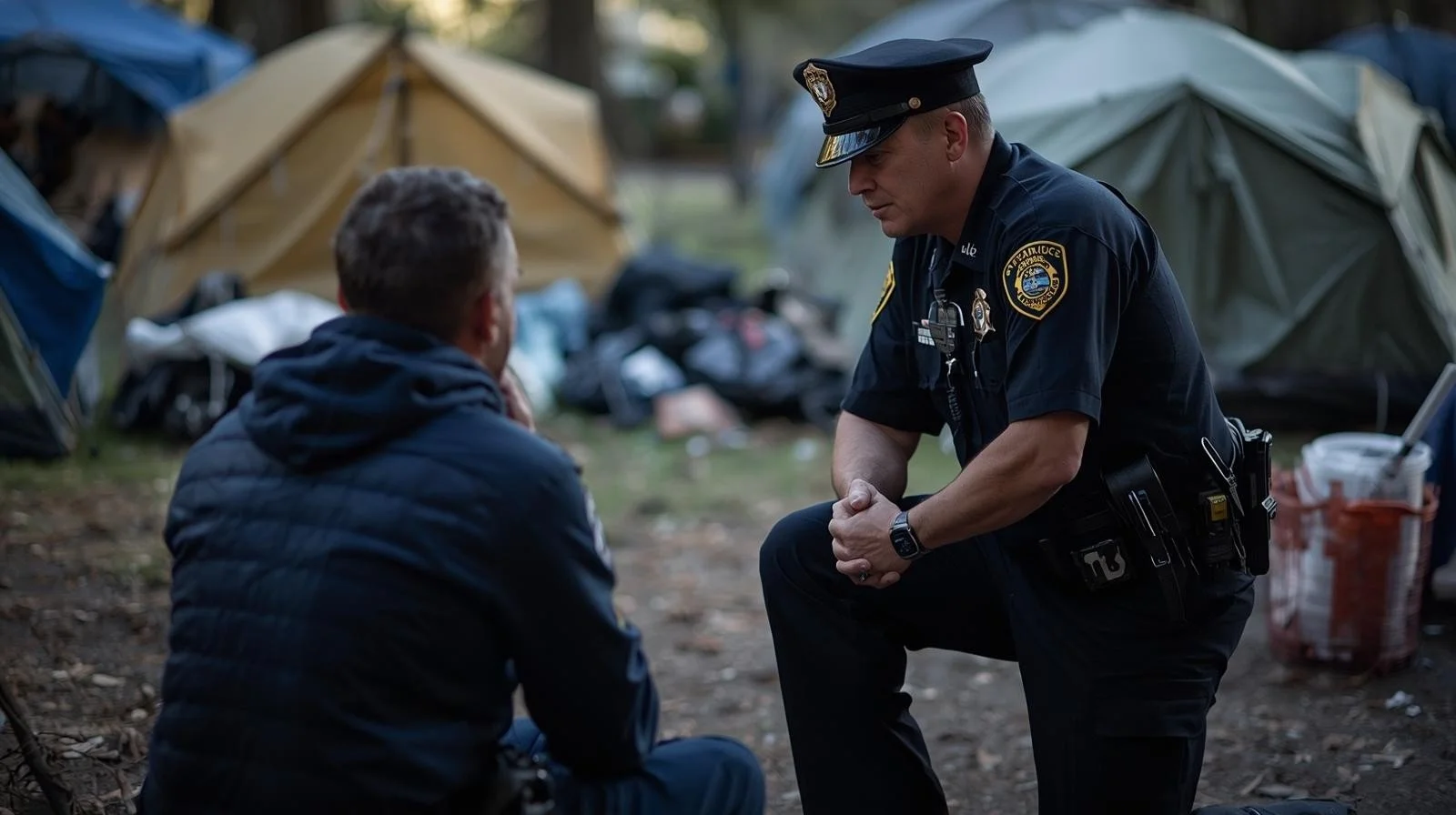
Study Highlights Use of Force when Police Encounter the Homeless
California’s Racial and Identity Profiling Act (RIPA) Report found a disparity in treatment of during traffic stops for people who appear to be homeless. These are newly documented statistics since the Supreme Court’s Grants Pass, Oregon Ruling opening the door for cities and states to evict homeless people from street encampments, confiscate their property, and subject them to criminal increased prosecution.
While most drivers are stopped because of apparent traffic violations, the report said, 64.8% of the stops of those that appear to be homeless were given a reasonable suspicion of wrongdoing, compared with 9.14% of stops where the person does not appear homeless.
The data illustrates that our police, like most of us, still hold the view that people that are unhoused are more dangerous than others. It doesn’t help that officers typically encounter homeless people after receiving complaints about encampments or trespassing. The Police need to factor in unknown risks, and often mental health conditions that can increase handcuffing or searches as a precaution during interactions and not a punishment. Similar police practices are happening in other states, although California appears to be the first with a detailed report.